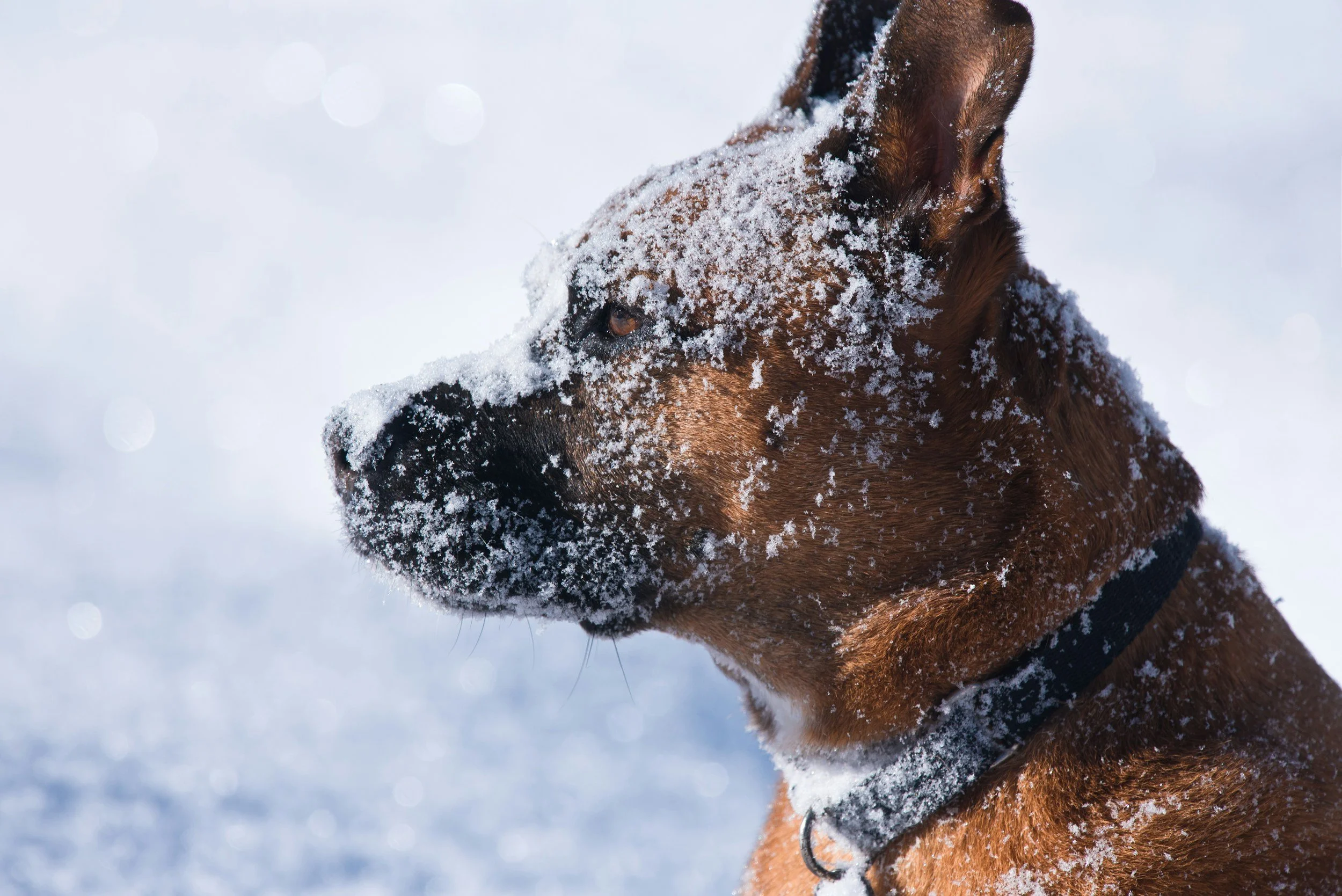
Why cold weather is more than just uncomfortable
When dogs step outside on a freezing morning, the cold doesn’t just touch the fur — it affects blood flow, nerves, and tissue oxygenation deep inside the paws, ears, and tail.
Cold causes blood vessels to narrow, a survival reflex meant to preserve core warmth. But in extremities like paw pads and ear tips, this reduced circulation can cause tissue stress, numbness, and in severe cases frostbite.
What many owners don’t realize is that frost damage starts internally, long before the skin turns white or blue. Tiny capillaries collapse first. Lymphatic drainage slows. Swelling follows.
Veterinarians see this clearly when they examine frost injuries: the skin tells only part of the story — underneath, the micro-circulation network is struggling.
This is why modern veterinary training now focuses heavily on visualizing blood vessels and lymphatic flow, not just skin symptoms. New digital anatomy tools allow students to see how cold affects tissues layer by layer — which is changing how frost injuries are diagnosed and treated.
What you can do
Limit exposure below –10°C
Dry paws immediately after walks
Watch for swelling, limping, or pale skin
Never rub frozen tissue — it damages vessels
Cold is invisible, but its effects inside the body are not.